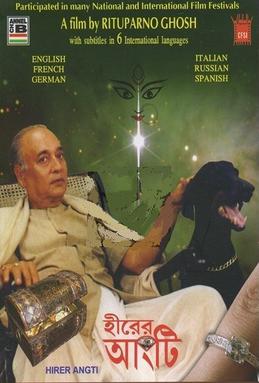
1992 · Bengali
Hirer Angti
Ghosh’s directorial debut, a family film about a young boy who inherits a magician’s ring and the strange happenings that follow. Based on the Shirshendu Mukhopadhyay novel.
Watch NowHirer Angti
1992
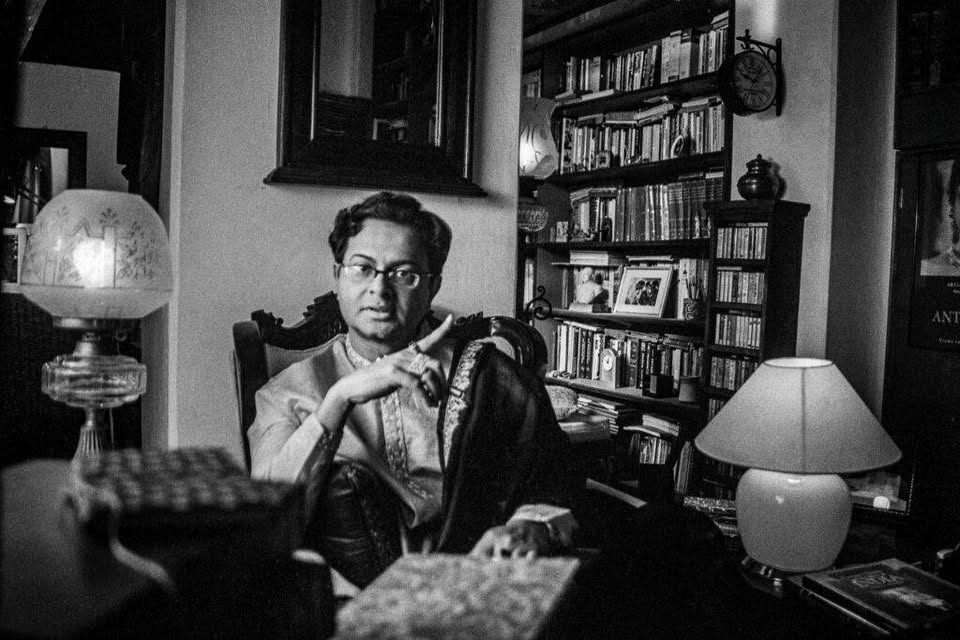
A Creative Soul
Roles
Rituparno Ghosh was a singular force in Indian cinema — a writer-director who returned the Bengali middle class to the theatre with stories of emotional precision and social daring.
Born in Kolkata in 1963, Ghosh came of age in a city steeped in literature, theatre, and the films of Satyajit Ray. He began his career as a copywriter before making his directorial debut with Hirer Angti (1992). Two years later, Unishe April announced a major talent: a filmmaker unafraid to slow time, listen to women, and expose the fault lines within families.
Over the next two decades he directed nineteen feature films in Bengali, Hindi, and English — including Dahan, Bariwali, Utsab, Chokher Bali, Raincoat, Dosar, The Last Lear, Abohoman, and Chitrangada. His cinema was literary without being literal, classical without being antique. He had an extraordinary ear for dialogue and an even deeper gift for silence.
Ghosh was also a prolific writer — of screenplays, lyrics, short stories, profiles, and editorials. In the final years of his life he stepped in front of the camera, acting with the same vulnerability he had long drawn from others. His work remains a boundary-crossing archive of modern Bengal: its hierarchies, its desires, and its quiet revolutions.

A streaming-library view of nineteen feature films across Bengali, Hindi, and English — each one a study in restraint, desire, and the architecture of feeling.
1992 · Bengali
Ghosh’s directorial debut, a family film about a young boy who inherits a magician’s ring and the strange happenings that follow. Based on the Shirshendu Mukhopadhyay novel.
Watch Now1992

1994 · Bengali
A celebrated dancer and her estranged daughter confront two decades of silence, resentment, and unspoken love during a single April evening. A landmark chamber drama that announced Ghosh as a major voice in Bengali cinema.
Watch Now1994
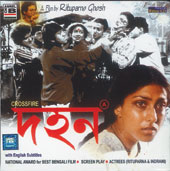
1997 · Bengali
A brutal street assault on a young woman exposes the moral fractures of middle-class Kolkata. Ghosh traces the ripple effects of courage, complicity, and compromise across two women’s lives.
Watch Now1997
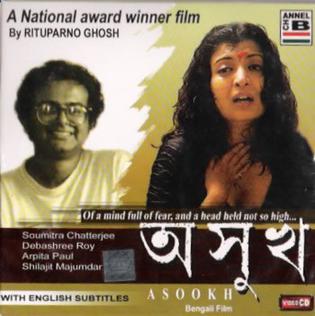
1999 · Bengali
A young actress faces a private health crisis while her mother grapples with the cost of ambition. Ghosh draws an intimate portrait of vulnerability within a family of performers.
Watch Now1999

2000 · Bengali
A lonely landlord’s quiet life is disrupted when a film crew rents her ancestral home. A meditation on longing, solitude, and the performance of everyday life.
Watch Now2000

2000 · Bengali
During the rituals of Durga Puja, a family gathers in their decaying mansion and confronts old wounds, hidden debts, and the fragile bonds that still hold them together.
Watch Now2000
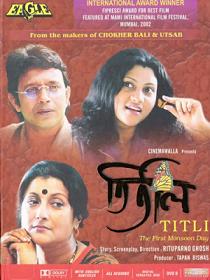
2002 · Bengali
An adolescent girl idolises a matinee idol while navigating her own awakening. Ghosh captures the tenderness and turbulence of growing up with remarkable restraint.
Watch Now2002
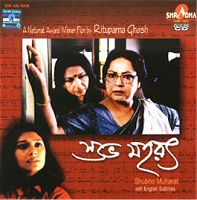
2003 · Bengali
A Bengal reimagining of Agatha Christie’s Miss Marple mystery, set inside the world of cinema. An elegant whodunit where every character carries a shadow.
Watch Now2003

2003 · Bengali
Rabindranath Tagore’s widow Binodini enters a household of desire, deceit, and repressed longing. Ghosh’s first collaboration with Aishwarya Rai became a milestone in literary adaptation.
Watch Now2003

2004 · Hindi
Two former lovers meet again on a rainy afternoon in Kolkata, each hiding the truth of their lives. A chamber piece of unspoken emotions, adapted from O. Henry’s The Gift of the Magi.
Watch Now2004

2005 · Bengali
In 19th-century Bengal, a zamindar exploits two wives in his quest for a male heir. A stark, sensual drama about power, patriarchy, and female resistance.
Watch Now2005
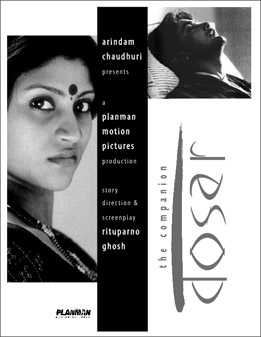
2006 · Bengali
Filmed in black and white, a man survives a car accident that kills his lover and must face the wreckage of his marriage. An unflinching study of guilt and forgiveness.
Watch Now2006

2007 · English
An ageing Shakespearean actor returns to the stage for one final, demanding role. Ghosh’s English-language film is a luminous tribute to theatre, memory, and mortality.
Watch Now2007

2008 · Hindi
An anthology film of eleven short stories on life in Mumbai, featuring Ghosh’s segment among contributions from Anurag Kashyap, Sudhir Mishra, Rahul Dholakia, Revathy, and others.
Not available for free streaming.2008

2008 · Bengali
A filmmaker struggling with his next project forms an unexpected bond with a young boy. Ghosh reflects on the innocence and artifice of cinema itself.
Watch Now2008

2009 · Bengali
After a poet’s death, his widow journeys into his past and discovers the women who shaped his art. A film about memory, betrayal, and the fictions we live by.
Watch Now2009
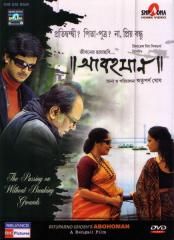
2010 · Bengali
An ageing director falls for an actress who recalls his first love, blurring past and present. Ghosh’s most autobiographical work, and his second National Award for direction.
Watch Now2010

2011 · Bengali
A stormy night, a boat wreck, and a case of mistaken identity set the stage for this Tagore adaptation about love, duty, and the accidents that shape our lives.
Watch Now2011

2012 · Bengali
A choreographer undergoes a gender transition to become the parent he wishes to be. Ghosh’s final, fearless work weaves personal longing with the Mahabharata myth of Chitrangada.
Watch Now2012

2013 · Bengali
Ghosh’s final film brings Byomkesh Bakshi to the screen in a moody investigation of murder and moral ambiguity. Released posthumously, it stands as a poignant farewell.
Watch Now2013

2013 · Bengali / Hindi
A bilingual satirical comedy about a married couple whose life turns upside down when a pair of antique sunglasses seems to reveal hidden truths. Shot in 2006, it premiered posthumously at the 19th Kolkata International Film Festival.
Not available for free streaming.2013
Ghosh won twelve National Film Awards across direction, screenplay, and feature film categories, alongside recognition at Berlin, Cannes, Locarno, Karlovy Vary, and festivals across Asia.


National Film Awards
Best Feature Film
National Film Awards
Best Screenplay
National Film Awards
Best Feature Film in Bengali
Bombay International Film Festival
FIPRESCI Prize (Special Mention)
National Film Awards
Best Feature Film in Bengali
Berlin International Film Festival
NETPAC Award
National Film Awards
Best Direction
Bombay International Film Festival
FIPRESCI Prize (Jury Prize)
National Film Awards
Best Feature Film in Bengali
National Film Awards
Best Feature Film in Bengali
Karlovy Vary International Film Festival
Crystal Globe (Nominated)
National Film Awards
Best Feature Film in Hindi
Cannes Film Festival
Les Cinémas du Monde — Official Selection
National Film Awards
Best Feature Film in English
National Film Awards
Best Feature Film in Bengali
National Film Awards
Best Direction
National Film Awards
Best Feature Film in Bengali
Kalakar Awards
Best Actor
National Film Awards
Special Jury Award
Documentaries and essay films that extend Ghosh’s own inquiry into literature, identity, and the lives of artists.
2018 · Directed by Sangeeta Datta
The first critical documentary on Rituparno Ghosh, drawing upon his own interviews, conversations, and personal memoirs. Through the voices of Soumitra Chatterjee, Sharmila Tagore, Aparna Sen, Konkona Sen Sharma, and others, the film traces a life lived between cinema, literature, and the search for self.
Featuring archive footage, conversations with collaborators, and readings from Ghosh’s own writings, Bird of Dusk offers an intimate portrait of an artist who reshaped Bengali cinema.
Also on Prime Video2013 · Directed by Rituparno Ghosh
Ghosh’s own documentary on Rabindranath Tagore, composed from the poet’s letters and writings. A meeting of two kindred artistic sensibilities across a century of Bengali culture.
Through Tagore’s correspondence and verse, Jeevan Smriti explores the inner life of a poet who shaped Bengal’s cultural imagination — a fitting subject for a filmmaker equally attuned to memory and longing.
Fragments of a life in cinema — words, images, and quiet recollections from collaborators, friends, and the city that shaped him.
“I felt like making films after I watched Satyajit Ray’s films. Many aspects of his filmmaking are also my favourites. The structure, dialogue, economy and gravity of his films are also inimitable.”

Rituparno Ghosh at MAMI, 2010
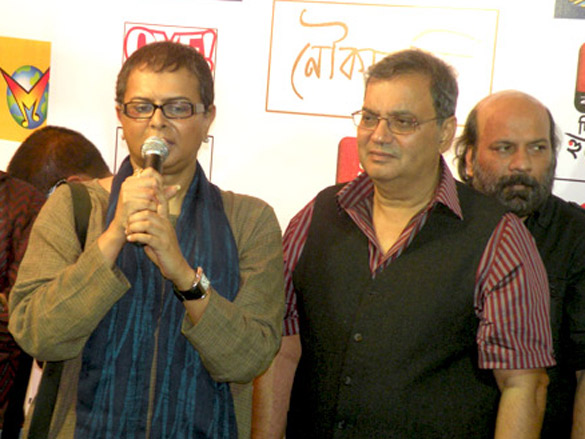
At the audio release of Noukadubi, 2011

With Shefali Shah and Divya Dutta at the premiere of The Last Lear, IFFI 2007

At the IFFI 2007 premiere of The Last Lear with Shefali Shah, Divya Dutta, and festival director Neelam Kapur
“I once had a fight with a European film jury; they were criticising our films for being too slow, and I said yes, but that’s our lifestyle!”
Across two decades, Ghosh collaborated with actors who became family: Prosenjit Chatterjee, Konkona Sen Sharma, Aparna Sen, Raima Sen, Jisshu Sengupta. He moved between Bengal, Bombay, and the world, yet his eye remained fixed on the interior lives of women and the silences between people.
“My city, I know, can neither handle me, nor ignore me.”
Receiving the National Award for Best Direction for Abohoman, 2010
“Writing is my greatest point of engagement with my film. When I write a line, I know exactly how it should be directed.”
He wrote profiles, short stories, song lyrics, and editorials. He hosted television conversations. He challenged conventions of gender and identity on screen and in public life. His work endures as an archive of modern Bengal — its tenderness, its cruelty, and its refusal to be silent.